


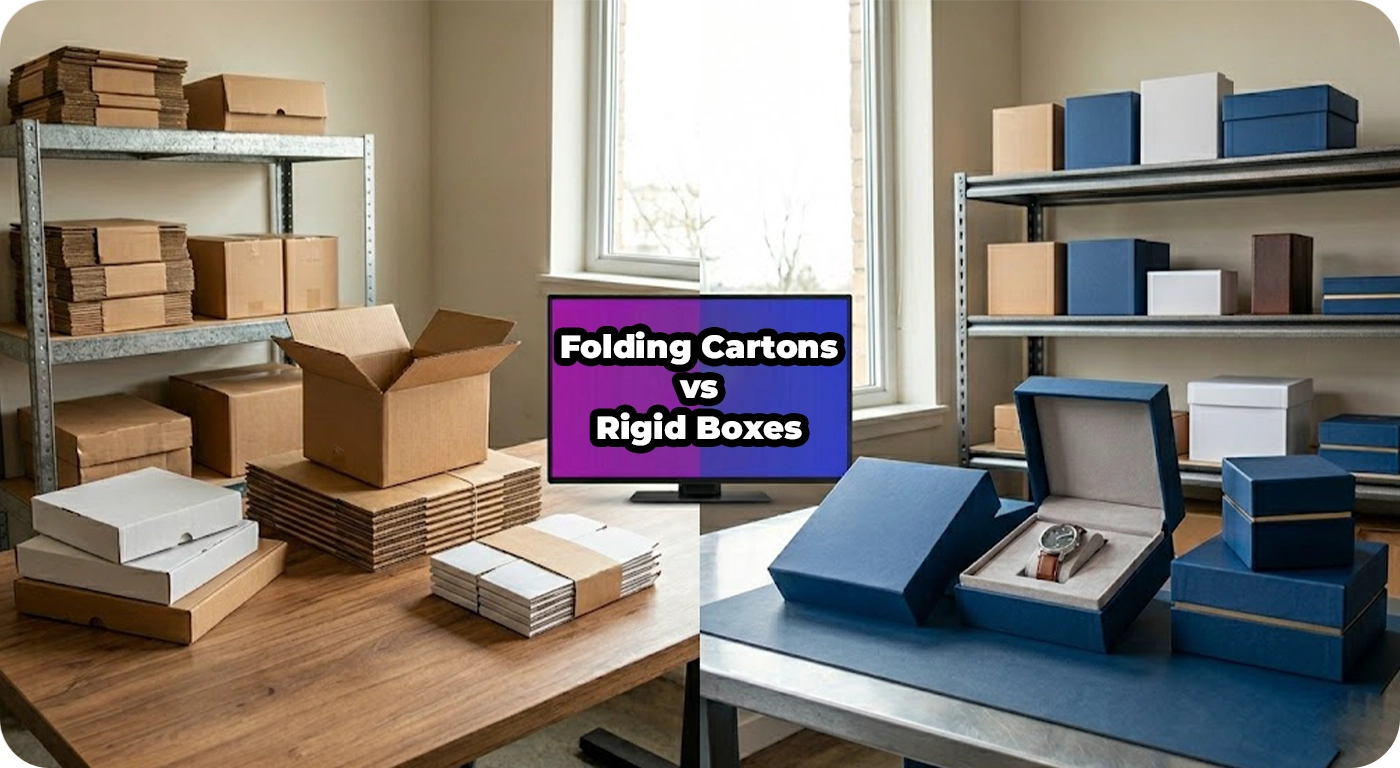
Walk down the aisle of any high-end retail store in the US, and you will see a massive variety of packaging styles. Some products sit in sleek, lightweight boxes that open from the top, while others come in heavy, premium containers with magnetic lids that feel like a gift on their own.
In the custom packaging world, this is the definitive divide between Folding Cartons and Rigid Boxes.
Choosing between these two isn’t just about what looks good; it directly impacts your production budget, shipping logistics, and how customers perceive the value of your product.
Let’s break down the core differences between folding cartons and rigid boxes so you can select the perfect armor for your brand.
1. What are Folding Cartons? (The Versatile Retail Standard)
If you’ve ever bought a tube of toothpaste, a box of cereal, or a standard bottle of skincare serum, you’ve handled a folding carton.
These boxes are made from a single sheet of thick paperboard (usually SBS or kraft) that is printed, die-cut, and creased. They ship completely flat to your warehouse, and your team snaps or glues them into shape during the fulfillment process.
The Best Features:
-
Incredibly Cost-Effective: Because they are made of paperboard, the material cost per unit is very low, especially for bulk wholesale orders.
-
Efficient Storage and Shipping: Since folding cartons ship 100% flat, they take up minimal space in your warehouse. You can store thousands of them in a small corner.
-
High Design Flexibility: Paperboard responds beautifully to high-speed offset printing, vibrant colors, embossing, and window cut-outs.
The Limitations:
-
Weight Limits: They are lightweight. If you try to put a heavy glass bottle or a heavy tech gadget inside, the bottom might give out.
-
The “Premium” Ceiling: While you can make them look beautiful with gold foil or spot UV, they still feel like paperboard. They don’t carry that heavy, high-end luxury weight.
2. What are Rigid Boxes? (The Ultimate Luxury Experience)
Think of the Apple iPhone box or a high-end French perfume box. That thick, sturdy, non-bendable structure is a rigid box (sometimes called setup boxes).
Unlike folding cartons, rigid boxes are made from highly condensed, thick chipboard (up to 4x thicker than paperboard). This heavy core is then tightly wrapped with high-quality printed paper, leatherette, or textured fabric. Crucially, they do not fold flat. They ship to you already assembled and ready to be filled.
The Best Features:
-
The Unmatched “Wow” Factor: Rigid boxes scream luxury, quality, and prestige. If your product is expensive, a rigid box justifies that high price tag to the customer.
-
Maximum Protection: The structural integrity is incredibly high. It shields fragile items (like luxury watches, glassware, or cosmetics) from being crushed during transit.
-
Keepsake Value: Customers rarely throw rigid boxes away. They often reuse them to store jewelry or documents, keeping your brand in their homes for years.
The Limitations:
-
High Production Cost: Because they require specialized manufacturing and manual assembly work, they are significantly more expensive per unit than folding cartons.
-
Expensive Freight & Storage: Since they ship fully assembled, you are essentially paying to ship and store “empty air.” You will need a lot of warehouse space to hold them.
Head-to-Head: Folding Cartons vs. Rigid Boxes
| Feature | Folding Cartons | Rigid Boxes |
| Material | Lightweight Paperboard | Heavy, Thick Chipboard |
| Shipping State | Ships flat (Low freight cost) | Ships pre-assembled (High freight cost) |
| Storage Space | Minimal | Substantial |
| Average Cost | Budget-friendly | Premium pricing |
| Typical Use-Case | Pharmaceuticals, food, standard cosmetics | Tech, jewelry, luxury spirits, high-end gifts |


