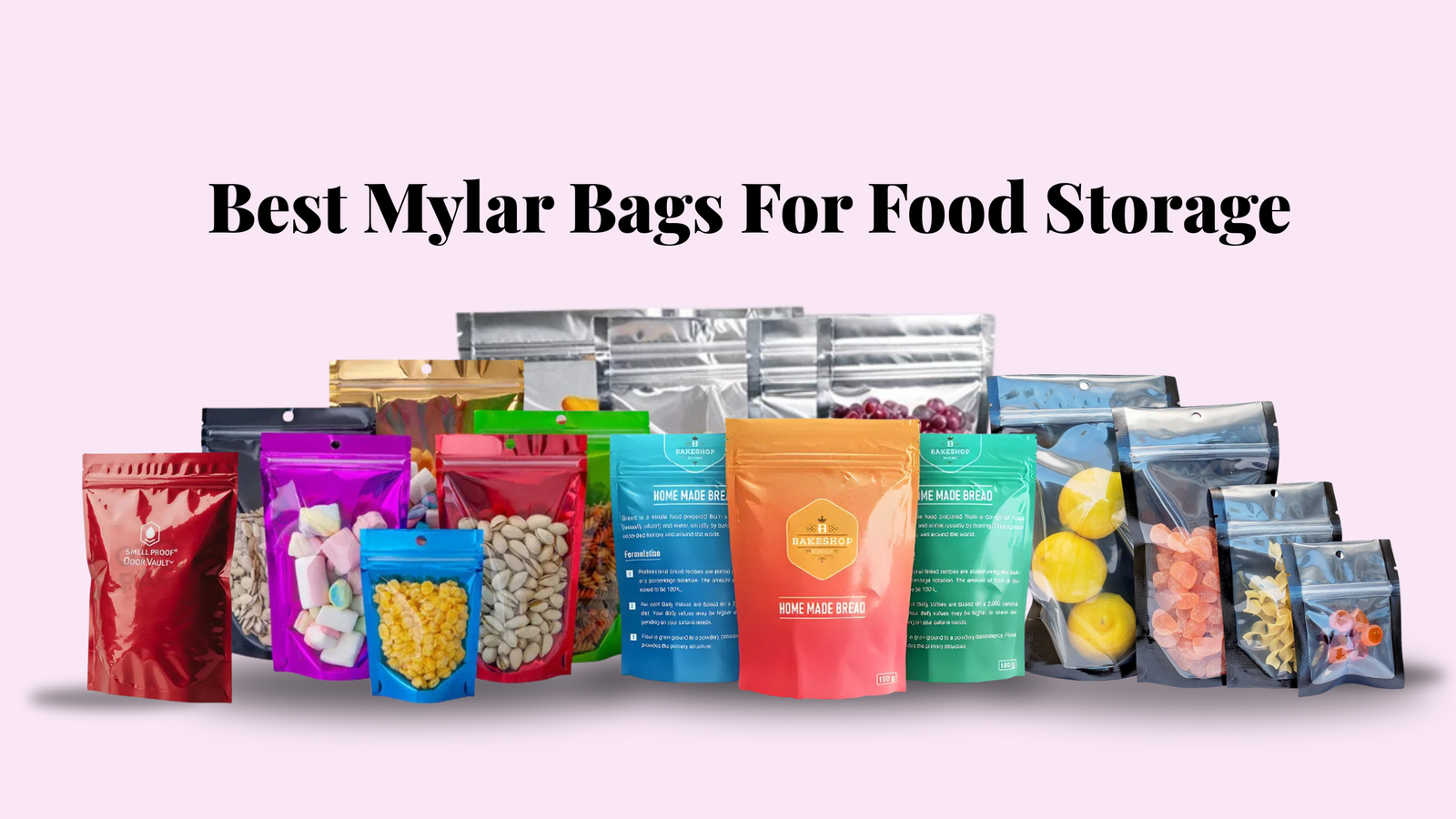
What Are the Best Mylar Bags for Food Storage?
Mylar bags have become a cornerstone for long-term food storage, offering unmatched protection against environmental factors that degrade food quality. Whether you're a prepper, a small business owner, or someone looking to preserve bulk food purchases, selecting the right Mylar bag is critical to ensuring your food stays fresh, safe, and edible for years. This comprehensive guide explores everything you need to know before choosing Best Mylar bags, the types available in the market, their key features, and why Legacy Printing stands out as a trusted supplier. We’ll also address frequently asked questions to help you make an informed decision.Understanding Mylar Bags: What Makes Them Ideal for Food Storage?
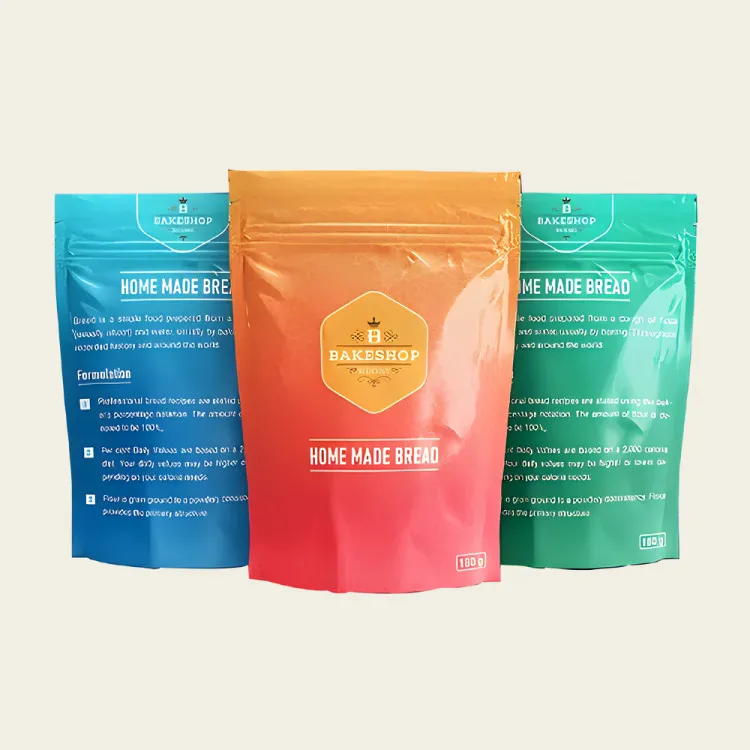 Best Mylar bags are made from biaxially-oriented polyethylene terephthalate (BoPET), a polyester film developed by DuPont in the 1950s. Known for its strength, flexibility, and barrier properties, Mylar is laminated with a thin layer of aluminum foil to create a robust, food-safe material. This combination makes Mylar bags highly effective at protecting food from the primary enemies of long-term storage: moisture, oxygen, light, and pests. When paired with oxygen absorbers and proper sealing techniques, best mylar bags can extend the shelf life of dry foods to 20–30 years under optimal conditions.
Why Use Mylar Bags for Food Storage?
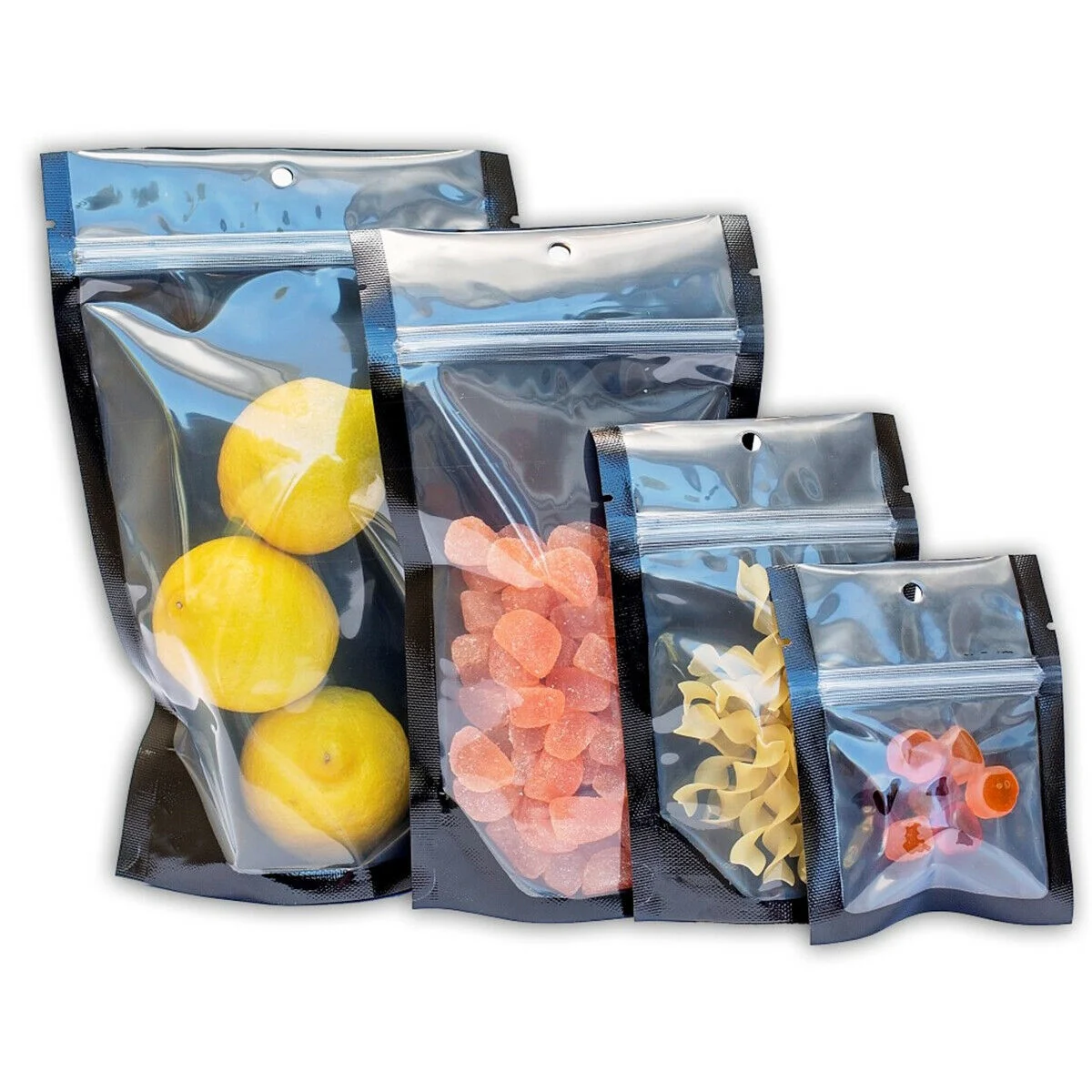 Mylar bags are favored for their:
- High Barrier Properties: The aluminum foil layer acts like a flexible can, blocking nearly all oxygen, moisture, and light, which prevents oxidation, mold growth, and nutrient degradation.
- Durability: Mylar is puncture-resistant and tear-resistant, ensuring the bag remains intact during storage or transport.
- Flexibility: Available in various sizes and styles, Mylar bags can accommodate everything from small spice packets to large bulk grains.
- Cost-Effectiveness: Compared to other long-term storage solutions like cans or vacuum-sealed containers, Best Mylar bags are affordable and reusable when properly maintained.
- Food Safety: High-quality Best Mylar bags are made from food-grade materials, free from harmful chemicals like BPA and phthalates.
Key Factors to Consider When Selecting Mylar Bags
Before purchasing Best Mylar bags, it’s essential to evaluate several criteria to ensure they meet your food storage goals. Below are the critical factors to consider:1. Thickness (Mil Rating)
The thickness of a best Mylar bag, measured in mils (1 mil = 1/1000 inch), directly impacts its durability and barrier performance. Thicker bags offer better protection but may be harder to seal with standard equipment.- 4–5 Mil: Suitable for short- to medium-term storage (1–5 years) or lightweight items like spices, dehydrated fruits, or snacks. These are less puncture-resistant and better for items stored in protective containers like buckets.
- 5–7 Mil: The recommended minimum for long-term food storage (5–20+ years). These bags provide a good balance of durability and flexibility, ideal for grains, beans, and freeze-dried foods.
- 7.5 Mil and Above: Premium options for heavy-duty storage or items with sharp edges (e.g., rice or pasta). These are ideal for standalone storage without additional containers but may require a high-quality heat sealer.
2. Material Composition
Authentic Best Mylar bags are made from BoPET laminated with aluminum foil. The aluminum layer is critical for blocking light and oxygen, with a minimum thickness of 0.00035 inches for optimal barrier properties. Avoid:- Transparent Mylar Bags: These lack the aluminum layer, offering minimal protection against light and UV damage, making them unsuitable for long-term storage.
- Metallized Polyester Bags: Often mistaken for Mylar, these have a thinner aluminum coating (measured in microns) and provide inferior barrier properties, similar to Mylar balloons.
3. Size and Capacity
Mylar bags come in various sizes to suit different storage needs:- Small (e.g., 7.5cm x 10cm, 1 pint): Ideal for spices, herbs, or small portions of dehydrated foods.
- Medium (e.g., 1 quart, 1 gallon): Suitable for grains, beans, or snacks for small families.
- Large (e.g., 5 gallons): Perfect for bulk storage of rice, wheat, or flour, often used with food-grade buckets.
4. Sealing Mechanism
Proper sealing is crucial to create an airtight and oxygen-free environment. Mylar bags can be sealed using:- Heat Sealers: Impulse sealers or tabletop heat sealers designed for Mylar (up to 8 mil) provide the strongest, most reliable seals. Look for sealers with adjustable heat settings to avoid melting thinner bags.
- Clothes Iron or Hair Straightener: A budget-friendly option for sealing smaller or thinner bags, though less precise and reliable.
- Ziplock Seals: Some Mylar bags come with resealable zippers for short-term use or frequent access. However, zippers alone are not sufficient for long-term storage and should be heat-sealed above the zipper for an airtight seal.
5. Oxygen Absorbers
Oxygen absorbers are essential for long-term storage, as they remove residual oxygen from the bag, preventing oxidation and pest survival. The size and number of absorbers depend on the bag’s capacity and the food’s density:- 1-Gallon Bags: Use 300–500cc oxygen absorbers for dense foods (e.g., flour) or 500–1000cc for less dense foods (e.g., pasta).
- 5-Gallon Bags: Use 2000–3000cc oxygen absorbers. Always seal the bag immediately after adding oxygen absorbers to maximize their effectiveness.
6. Storage Conditions
Even the best Mylar bags require proper storage conditions to maximize shelf life:- Temperature: Store in a cool, dry place (below 75°F/24°C) to prevent heat-related degradation.
- Light: Keep bags in opaque containers (e.g., food-grade buckets) to block light, especially if the bags are not fully opaque.
- Pest Protection: While Mylar is pest-resistant, rodents can chew through thinner bags. Store bags in buckets or totes for added protection.
- Labeling: Use a permanent marker to label bags with contents and sealing date to track shelf life.
7. Brand Reputation and Quality
Not all Mylar bags are manufactured to the same standards. Reputable brands like Wallaby, PackFreshUSA, and Harvest Right are known for consistent quality and customer support. Check for:- Food-Grade Certification: Ensures the bags are free from harmful chemicals.
- Customer Reviews: Look for feedback on durability, sealing performance, and absence of pinholes.
- After-Sale Support: Brands with responsive customer service can replace defective bags quickly.
8. Additional Features
Some Best Mylar bags offer features that enhance usability:- Gussets: Expandable sides allow bags to stand upright or hold more volume, ideal for grains or freeze-dried foods.
- Stand-Up Pouches: Convenient for retail display or frequent access.
- Spout Pouches: Suitable for pastes or liquids, though less common for long-term storage.
- Custom Printing: Useful for businesses to brand bags with logos or nutritional information.
Types of Mylar Bags Available in the Market
When it comes to preserving food for the long haul, selecting the best Mylar bags is essential for ensuring freshness, safety, and extended shelf life. Mylar bags, renowned for their robust barrier properties against moisture, oxygen, and light, come in a variety of types tailored to diverse storage needs. Whether you’re a prepper stockpiling bulk grains, a home cook organizing spices, or a business owner packaging products for retail, understanding the different types of best Mylar bags available will help you choose the right option.
Mylar bags come in various styles, each designed for specific food storage applications. Below are the most common types available:
1. Flat Mylar Bags
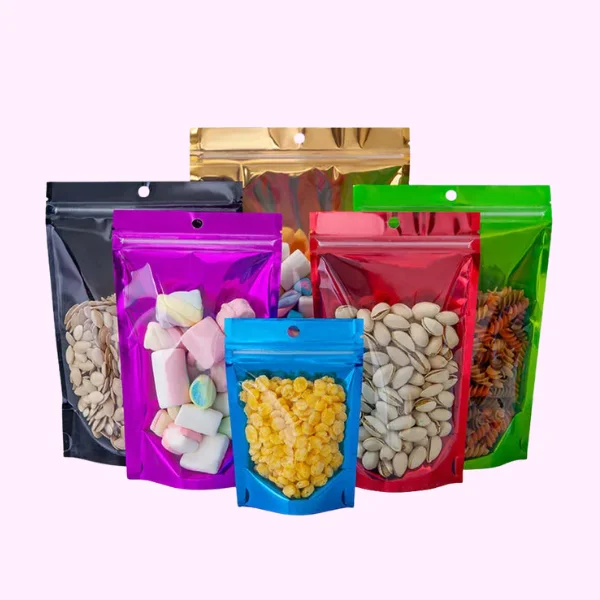
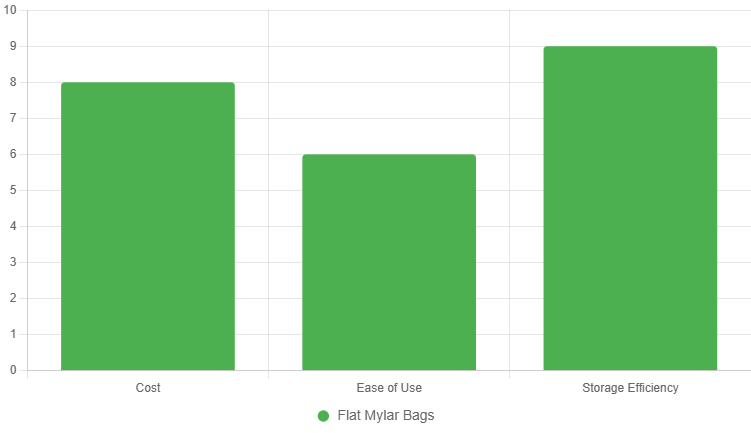
Flat Mylar bags are straightforward, non-gusseted pouches available in sizes ranging from 1 pint to 5 gallons. These bags are a go-to choice for bulk storage of dry goods like grains, rice, flour, or dehydrated fruits and vegetables, especially when used inside buckets or boxes for added support. The best Mylar bags in this category feature a thick aluminum foil layer, providing superior protection against environmental factors, making them ideal for long-term food storage.
Best For: Bulk storage of grains, flours, or dehydrated foods, particularly when paired with buckets. Pros:
- Highly cost-effective, making them one of the most affordable options for large-scale storage.
- Widely available in various sizes, catering to both small and large storage needs.
- Easy to heat-seal, ensuring an airtight closure for maximum preservation. Cons:
- Less convenient for filling without external support, such as a bucket or box, due to their flat structure.
- Not designed for frequent access or reusability.
2. Ziplock Mylar Bags
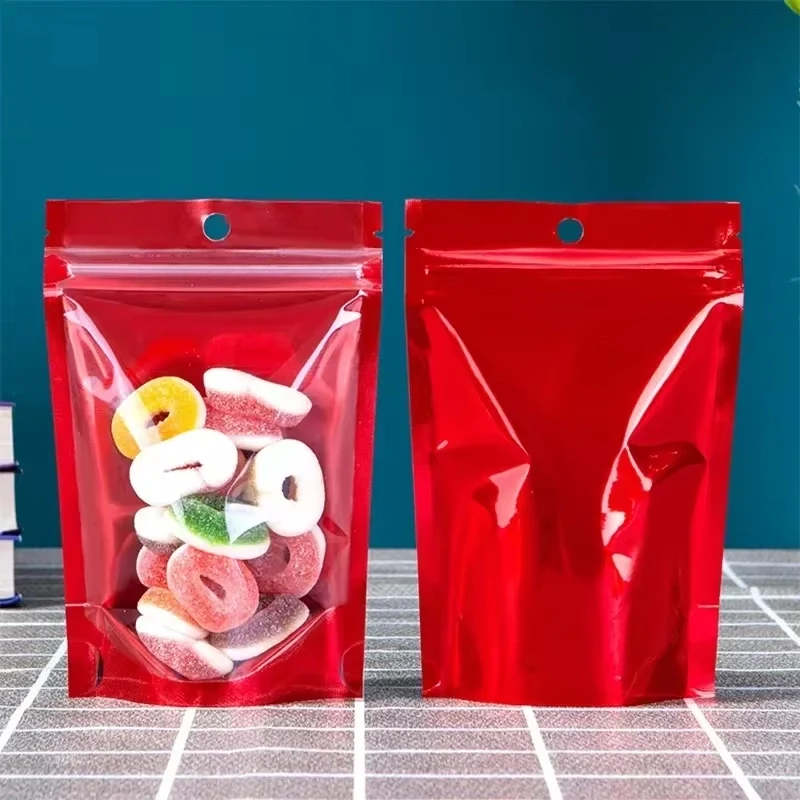
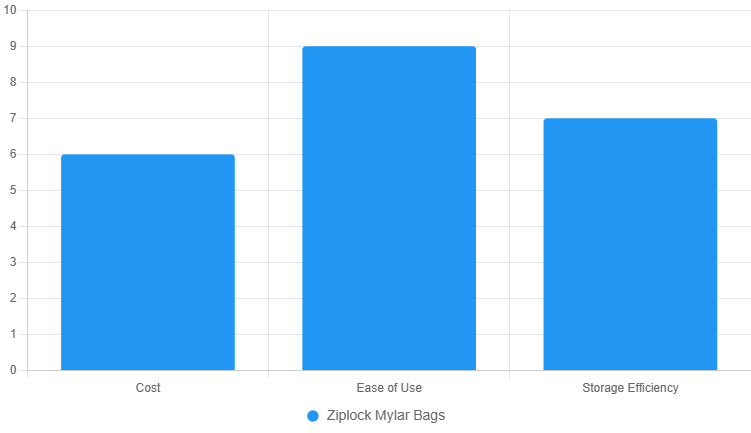
Ziplock Mylar bags come equipped with a resealable zipper, allowing easy access to contents without sacrificing the option to heat-seal the bag for long-term storage. These bags are perfect for items that need frequent access, such as spices, snacks, or small portions of grains. The best Mylar bags with ziplock features balance convenience with Mylar’s protective qualities, though the zipper must be heat-sealed for an airtight seal suitable for long-term storage.
Best For: Short-term storage or frequently accessed items like spices, snacks, or dried fruits. Pros:
- Reusable, allowing multiple openings and closings for daily use.
- Highly convenient for portion control and quick access.
- Can be heat-sealed above the zipper for long-term storage when needed. Cons:
- The zipper seal is not airtight unless heat-sealed, limiting long-term storage reliability.
- Slightly more expensive than flat Mylar bags due to the added zipper feature.
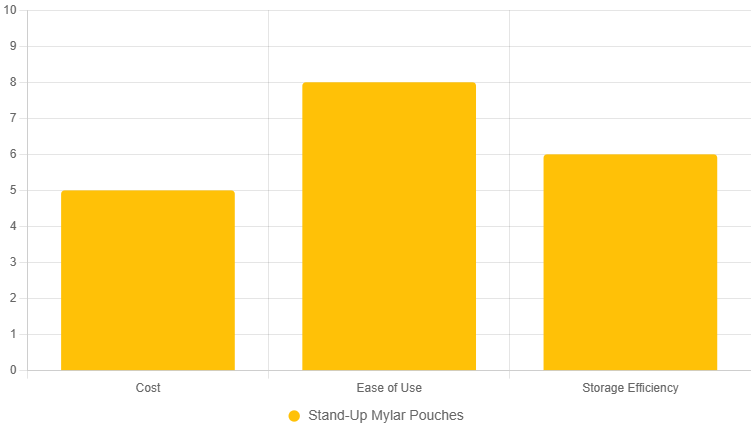
3. Stand-Up Mylar Pouches
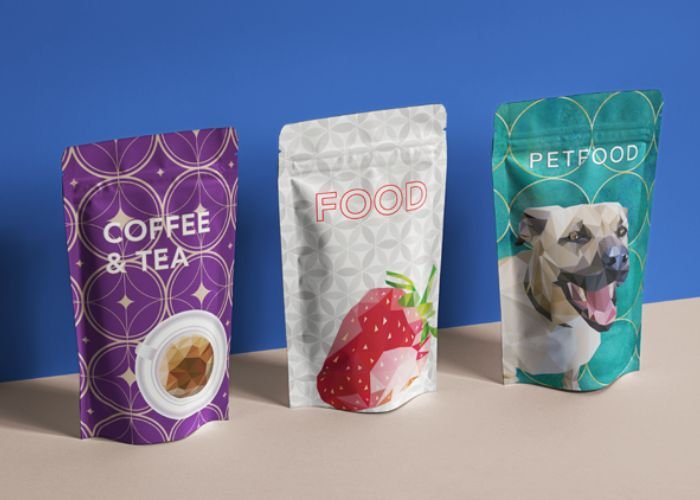
Stand-up Mylar pouches feature gussets that allow them to stand upright independently, making them a popular choice for retail packaging and home organization. These bags are ideal for lightweight items like dried herbs, snacks, or small portions of grains, and their attractive design makes them suitable for shelf display. The best Mylar bags in this category often include customizable printing options, appealing to businesses looking to enhance their product presentation.
Best For: Displaying products on shelves or storing lightweight items like dried herbs or snacks. Pros:
- Visually appealing, making them ideal for commercial and retail use.
- Easy to fill and store due to their self-standing design.
- Available in various sizes for versatile applications. Cons:
- More expensive than flat Mylar bags, increasing overall costs.
- Less suitable for heavy or bulk items due to their structural limitations.
4. Spout Pouches
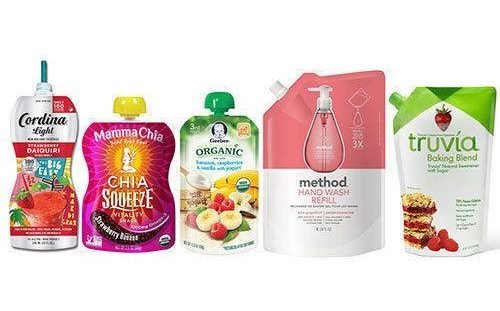
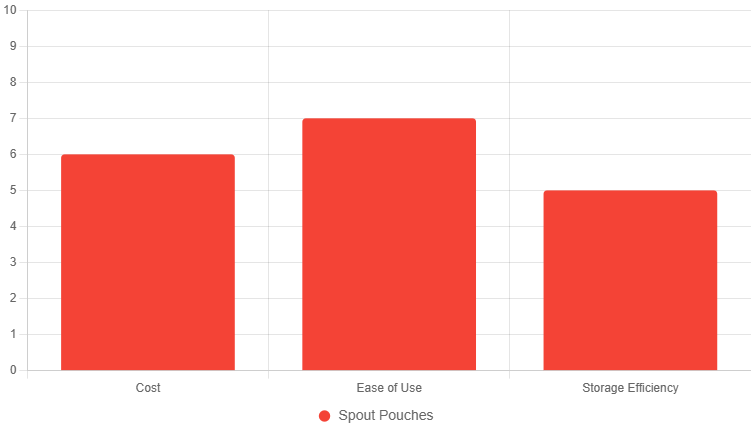
Spout pouches are Mylar bags designed with a nozzle and cap for easy dispensing of liquids or semi-liquid foods, such as sauces, creams, or purees. While not suited for long-term storage of dry goods, these bags are highly practical for specific applications. The best Mylar bags with spouts are reusable and convenient for controlled pouring, making them a niche but valuable option.
Best For: Sauces, creams, or other semi-liquid foods requiring easy dispensing. Pros:
- Highly convenient for pouring and dispensing liquids or pastes.
- Reusable, reducing waste for certain applications.
- Compact and easy to store compared to rigid containers. Cons:
- Limited to specific applications, unsuitable for dry bulk storage.
- Less durable for long-term storage compared to other Mylar bag types.
5. Mylar Sachets
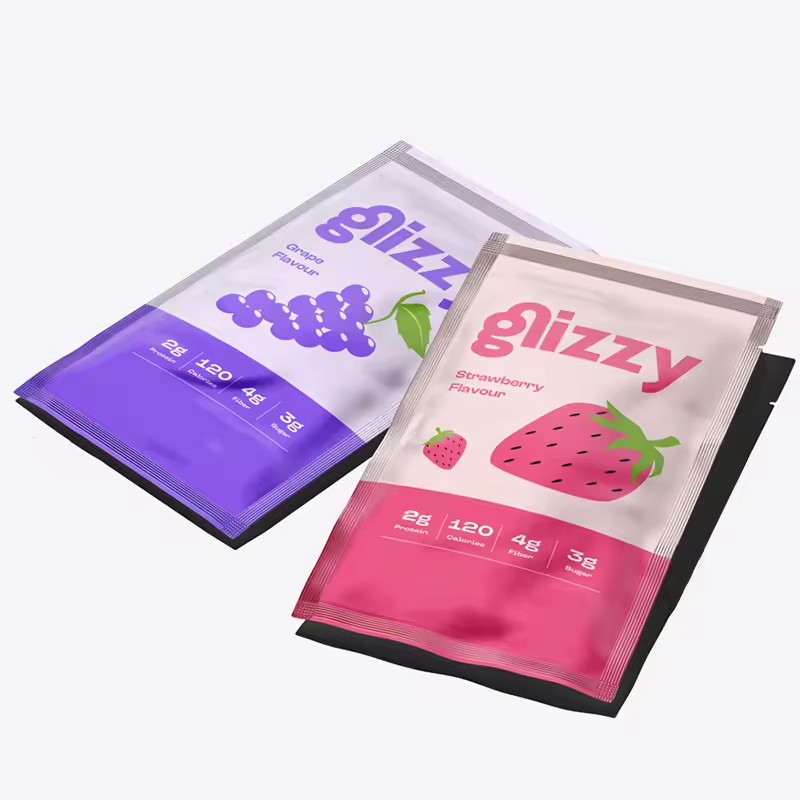
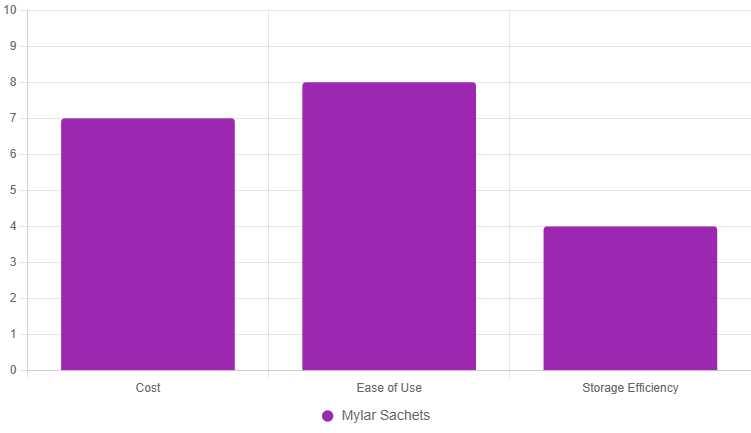
Mylar sachets are small, single-use packets designed for tiny portions, such as spices, condiments, or single-serving snacks like candies or nuts. These are perfect for portability and small-scale commercial packaging. The best Mylar bags in this category are cost-effective for small quantities and highly convenient for on-the-go use.
Best For: Spices, condiments, or single-serving snacks like candies or nuts. Pros:
- Highly portable, ideal for travel or single-use scenarios.
- Cost-effective for small quantities, reducing waste.
- Easy to seal and distribute for commercial or personal use. Cons:
- Impractical for bulk storage due to their small size.
- Higher per-unit cost when used for large-scale storage.
6. Rollstock Mylar
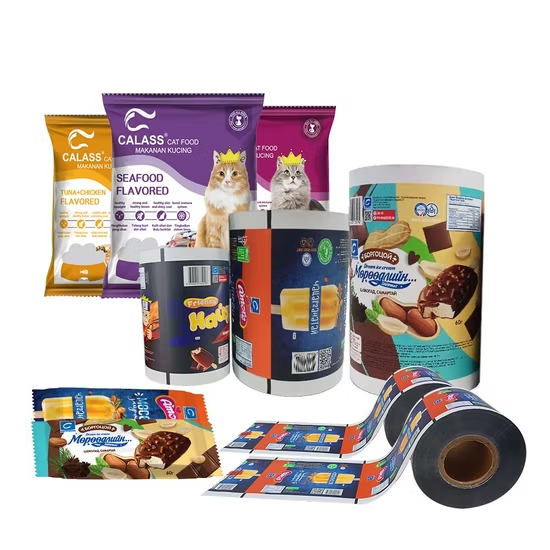
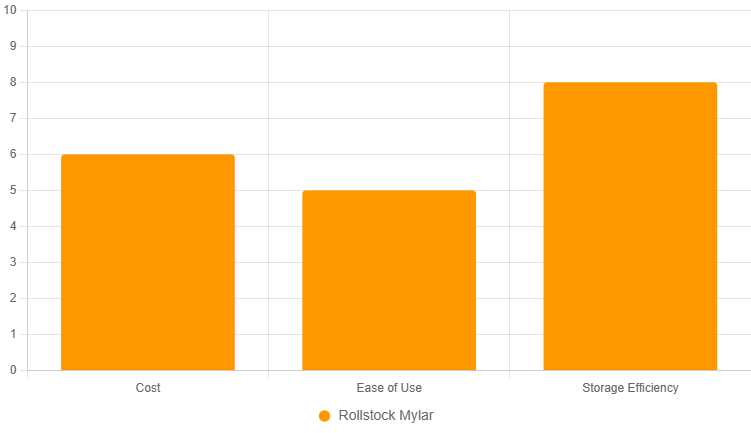
Rollstock Mylar comes in continuous rolls of Mylar film, allowing users to cut and seal bags to custom sizes. This type is ideal for preppers or businesses needing flexible sizing options for unique storage needs. The best Mylar bags in rollstock form minimize waste and offer tailored solutions, though they require more effort and equipment to use effectively.
Best For: Preppers or businesses needing customizable sizing options. Pros:
- Fully customizable, reducing material waste and allowing precise sizing.
- Cost-effective for large-scale or specialized storage needs.
- Versatile for various applications, from small to large bags. Cons:
- Requires precise cutting and sealing, which can be challenging for beginners.
- Needs specialized equipment, such as a heat sealer, for efficient use.
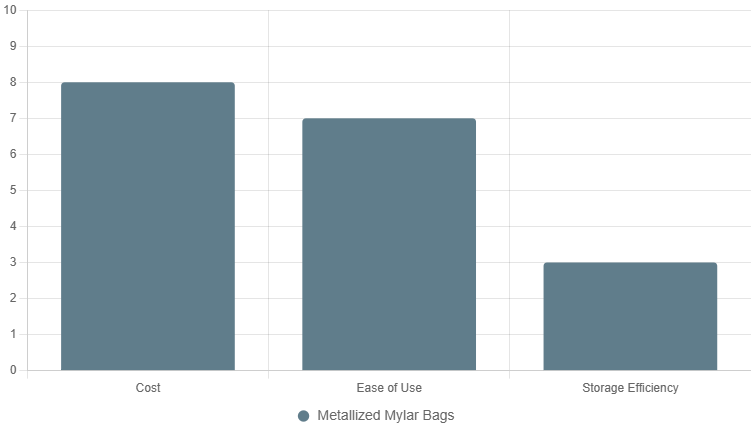
7. Metallized Mylar Bags
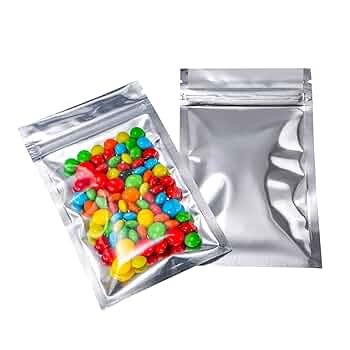
Metallized Mylar bags use a thinner aluminum coating instead of a full foil layer, offering a lightweight, shiny alternative. These bags are often used for short-term storage or decorative purposes, such as Mylar balloons. However, the best Mylar bags for long-term food storage typically feature thicker foil layers, as metallized bags provide inferior barrier properties.
Best For: Short-term storage or decorative purposes like Mylar balloons. Pros:
- Lightweight and visually appealing with a shiny finish.
- Affordable for non-critical or short-term storage needs.
- Easy to handle and seal for quick use. Cons:
- Poor barrier properties, making them unsuitable for long-term food storage.
- Less durable than standard Mylar bags with full foil layers.
Foods Suitable for Mylar Bag Storage
Mylar bags are best suited for low-moisture, low-fat foods to maximize shelf life. Below is a guide to common foods and their storage duration when properly sealed with oxygen absorbers:- Grains (e.g., rice, wheat, oats): 20–30 years
- Legumes (e.g., beans, lentils): 20–30 years
- Dehydrated Fruits/Vegetables: 5–20 years
- Freeze-Dried Foods: 15–25 years
- Flour and Powdered Foods: 5–10 years
- Spices and Herbs: 2–5 years
- Dehydrated Meat (e.g., jerky): 1–3 years
- Nuts and Seeds: 6 months–1 year (due to high fat content)
Step-by-Step Guide to Using Mylar Bags
To achieve optimal results, follow these steps for packing food in Best Mylar bags:- Choose the Right Bag: Select a size and thickness appropriate for your food and storage duration.
- Prepare the Food: Ensure food is dry and free of moisture. Dehydrate or freeze-dry if necessary.
- Set Up an Assembly Line: Place bags in buckets or use supports to keep them upright for filling.
- Fill the Bag: Leave enough headspace (2–3 inches) for sealing.
- Add Oxygen Absorbers: Place the appropriate size and number of absorbers based on bag size and food density.
- Seal the Bag: Use a heat sealer for an airtight seal. Double-check for leaks by pressing the bag or submerging it in water (no bubbles should appear).
- Label the Bag: Mark with contents and sealing date.
- Store Properly: Place in a food-grade bucket or tote, in a cool, dark, dry location.
Why Choose The Legacy Printing for Your Mylar Bags?
When it comes to sourcing high-quality Best Mylar bags, The Legacy Printing stands out as a premier supplier. Here’s why:- Customization Options: Legacy Printing offers tailored solutions, including custom sizes, thicknesses (e.g., 5 mil, 7 mil, 7.5 mil), and printed designs with logos or nutritional information, perfect for businesses or preppers looking to organize their pantry.
- High-Quality Materials: Their Mylar bags are made with food-grade, multi-layer structures, including a robust aluminum foil layer for superior barrier protection.
- Wide Range of Styles: From flat pouches to gusseted stand-up bags, Legacy Printing provides options for every need, including ziplock and spout pouches.
- Reliable Customer Service: Known for responsive support and quick replacements for defective products, ensuring peace of mind.
- Competitive Pricing and Free Shipping: The Legacy Printing offers cost-effective solutions with free shipping on bulk orders, making it ideal for large-scale prepping or commercial use.
- Sustainability: Their bags are reusable and made with eco-conscious practices, reducing environmental impact.
- Fast Turnaround: With efficient production and delivery, you can get your custom or standard Mylar bags quickly.