Table of Contents
Burger boxes don’t get much credit; they’re folded in seconds, stacked by the hundreds, and quickly tossed into takeaway bags without any attention. Yet, in the busy, bustling kitchens, it’s those boxes that quietly determine whether the burger is going to arrive intact, warm, and worth the price.
If you’ve ever opened a box to find a soggy bottom layer or a squashed bun, you already know how much packaging matters. In today’s food service industry, burger boxes have to work way harder to handle steam, grease, stack pressure, delivery travel time and branding.
 Finding this balance is where quality food packaging stands out. You don’t have to make the box thicker; you only have to make it smarter. Another important issue is stackability. For high-volume restaurants, boxes must hold their shape when layered during rush hours. A weak structure doesn’t just give a bad appearance; it gives bad service.
Designed for Real Kitchen Conditions
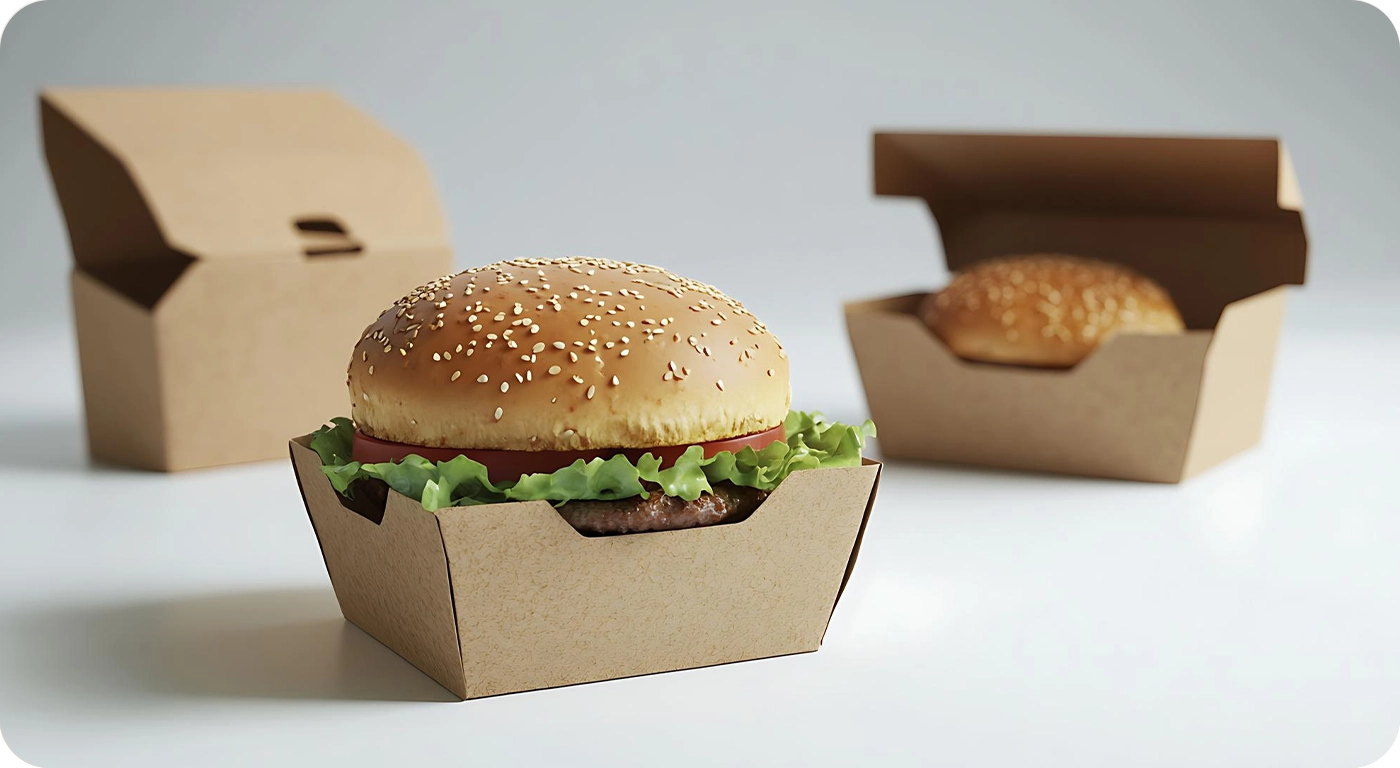
A burger that is fresh off the grill releases heat and moisture immediately, and if the steam is trapped in the box with nowhere to go, condensation builds up fast. That’s when buns soften, and structure fails. A well-designed burger box solves this without compromising temperature. Adding a vent with smart placement allows steam to gradually escape, while still retaining warmth. The base of the box needs to be strong enough to resist grease absorption, but it also has to be breathable enough to protect its texture.
Finding this balance is where quality food packaging stands out. You don’t have to make the box thicker; you only have to make it smarter. Another important issue is stackability. For high-volume restaurants, boxes must hold their shape when layered during rush hours. A weak structure doesn’t just give a bad appearance; it gives bad service.
Materials That Match the Menu
Different burgers demand different packaging solutions.- Classic Kraft burger boxes are durable, recyclable, and visually aligned with modern ‘organic’ branding, handling moderate grease well and are cost-effective.
- Polycoated or grease-resistant boards are used for heavier builds, offering extra protection, as they oil soak-through and maintain structural integrity.
- Wax-coated options are also grease-resistant and keep the burger juicy.
- Compostable or bioplastic-lined boards also meet the eco requirements for customers paying attention to what happens after the meal, not just during it.
Burger Boxes and Delivery Reality
The rise of third-party delivery services has changed packaging expectations across the country. A burger that has to travel 20-30 minutes before it’s opened needs the box to protect against:- Movement inside insulated delivery bags
- Compression from other containers
- Temperature shifts
- Moisture build-up
Branding in a Space People Actually Notice
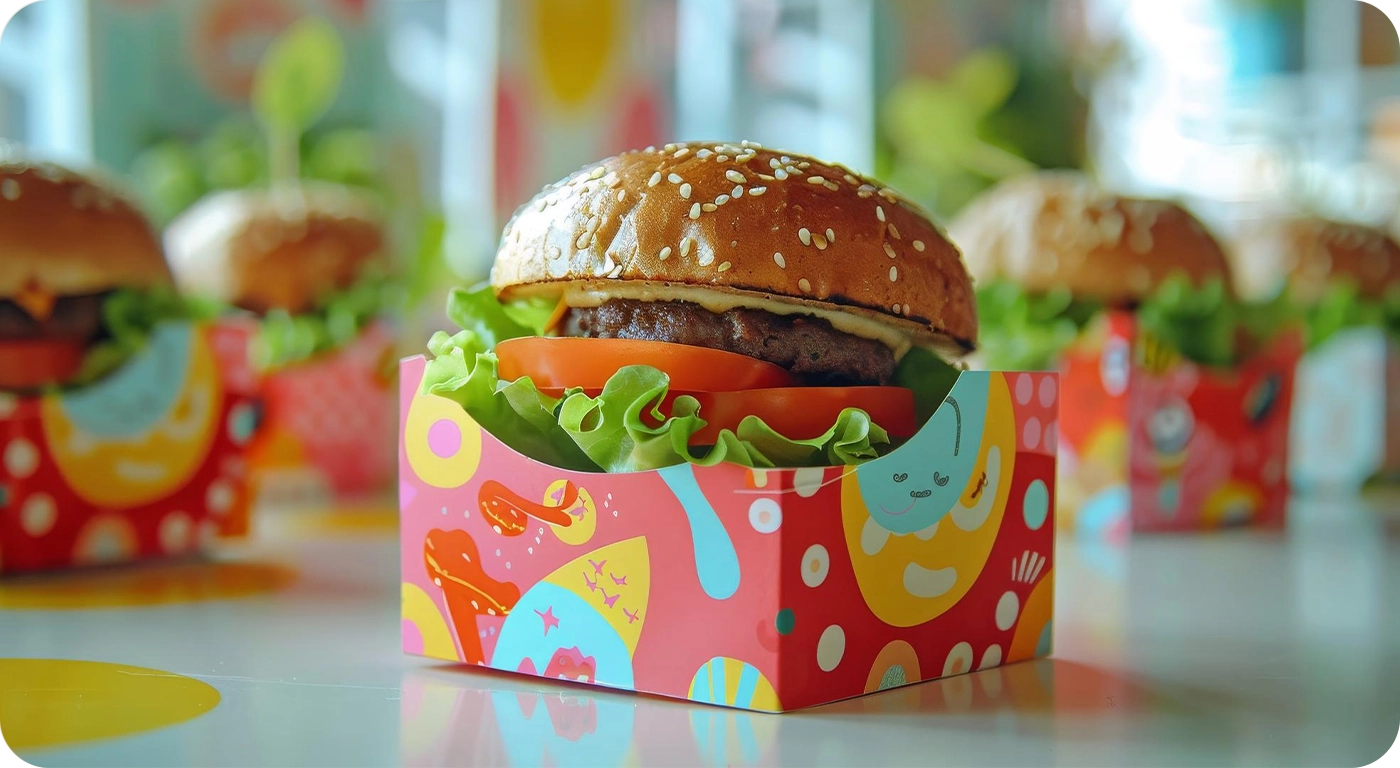
Food packaging is one of the few marketing tools customers physically hold; it gives brands enough space to reinforce brand identity without overcomplicating the design. A strong logo placement, bold typography, and clean color contrast often work better than a cluttered artwork. While the exterior of the box is a blank canvas, the interior lid can also be used for messaging, like a short phrase, a playful line or a social media prompt. Nothing too loud, just memorable. And in a world where customers photograph each meal before eating it, packaging becomes part of the image. A custom burger box can silently increase brand visibility online without paying thousands as additional advertising costs.Practical Details That Make a Big Difference
Small structural choices can improve performance dramatically:- Proper sizing prevents burgers from sliding around.
- Vent placement reduces sogginess.
- Board thickness affects stacking strength.
- Grease resistance preserves presentation.
Where Smart Burger Packaging Pays Off
When burger boxes are thoughtfully designed, the benefits show up quickly:- Fewer damaged orders
- Better customer satisfaction
- Stronger brand recognition
- Improved operational flow during peak hours